The success of a lawn seedling begins even before opening the seed bag. A poorly prepared soil results in uneven germination, bare patches, and a lawn vulnerable from the first dry summer. Understanding the terrain’s structure, its biological composition, and current regulatory constraints helps avoid costly rework a few months later.
Ban on synthetic herbicides: what it changes for soil preparation
Since January 1, 2019, individuals are no longer allowed to buy, use, or even possess synthetic plant protection products for their gardens. Glyphosate-based herbicides, long used to clean a site before seeding, are included. The penalties can reach up to 2 years in prison and 75,000 euros in fines.
This ban fundamentally changes the first phase of soil preparation for grass. Where a total herbicide application used to solve the weed problem in a few days, it is now necessary to combine mechanical and manual methods, which are longer but comply with the law.
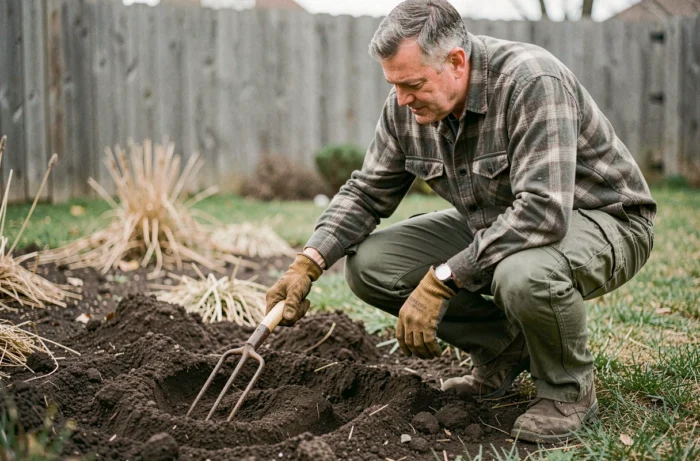
For a small area, manual weeding remains the most direct method: fork-spade, extraction of taproots, raking. On a larger site, using a tiller or rotavator allows for scalping the existing vegetation and burying it. Some gardeners opt for a false seeding: prepare the soil, wait for the weeds to germinate, then destroy them with shallow hoeing before the actual seeding.
Soil structure and microbiome: preparing the earth deeply
Most guides describe tilling and raking. Few focus on what happens beneath the surface. A biologically active soil, rich in microorganisms and earthworms, offers better water retention and natural aeration than simple mechanical work can reproduce.
Assessing texture before any intervention
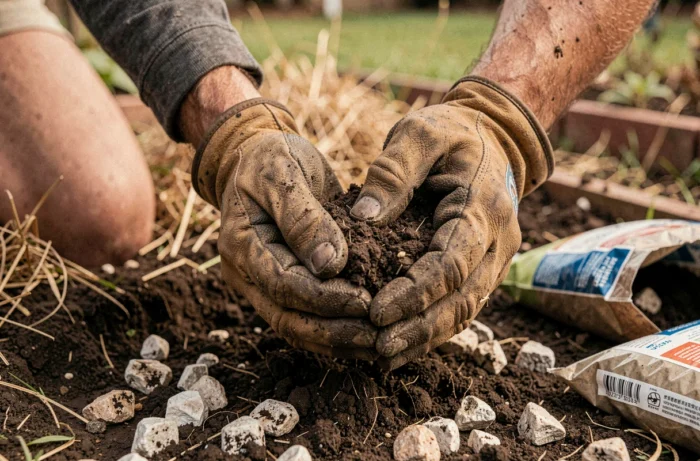
Taking a handful of moist soil and rolling it between your fingers gives a first indication. If it forms a smooth sausage, the soil is clayey and may compact. If it crumbles immediately, the soil is sandy and will poorly retain water. A loamy mixture, which holds together without sticking, is the most favorable for grass.
A soil that is too clayey or too sandy requires amendment before any seeding. For clay, coarse sand and compost improve drainage. For sand, adding topsoil and organic matter enhances water retention capacity.
Stimulating soil life rather than just turning it over
Recent recommendations emphasize stimulating the soil microbiome. Adding worm compost or organic fertilizers feeds beneficial bacteria and fungi that, in turn, structure the soil and facilitate grass rooting.
- Worm compost, spread in a thin layer before the final raking, introduces microorganisms and nutrients directly assimilable by young roots.
- Slow-release organic fertilizers (ground horn, dried blood) provide nitrogen over several weeks, without burning seeds at the time of germination.
- A light mulch at the edge of the seeded area limits erosion and maintains surface moisture during the critical germination phase.
This approach takes a bit more time than simply spreading mineral fertilizer, but field reports show a denser and more resilient lawn from the first year.
Leveling the ground: why depressions pose more problems than bumps
A bumpy terrain complicates mowing. A hollow terrain, on the other hand, causes different issues: water stagnation, root rot, and moss growth. Filling the depressions is more urgent than leveling the bumps.
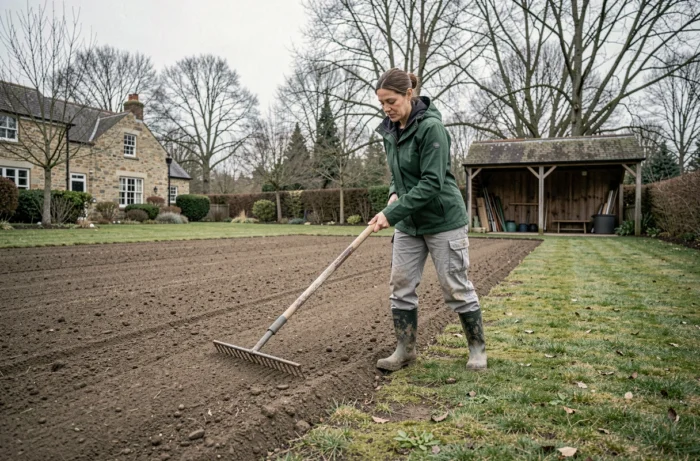
The method involves stretching a string line between two stakes to identify low areas. These are filled with a mixture of topsoil and compost, in successive layers of a few centimeters, lightly compacting between each addition. Adding all the volume at once creates subsequent settling, as the freshly added soil compacts under the effect of watering and rain.
The final rolling, often presented as a mere formality, has a specific role: it ensures contact between the seeds and the soil, which speeds up germination. A roller that is too heavy on wet soil produces the opposite effect by creating an impermeable crust.
Preparing the soil to withstand drought from the moment of seeding
Extended heat episodes have become recurrent in France. Preparing the soil solely for good germination is no longer sufficient. The soil must also store water and slowly release it to the roots during dry weeks.
Several practices, still little known in popular guides, allow for integrating this dimension from the preparation phase:
- Deep aeration (with a broadfork or a tiller set deep) breaks up plow pans that block water infiltration and deep rooting.
- A massive application of compost (not just a few centimeters on the surface) increases the soil’s water retention capacity throughout the worked layer.
- Localized scheduled watering, implemented from the germination phase, avoids wasting water through diffuse watering and trains young grasses to seek water deeply.
However, field reports diverge on the benefits of adding synthetic water retainers to the soil before seeding. Some landscapers recommend them for very draining soils, while others point out their rapid degradation and cost. Available data do not allow for conclusions about their long-term effectiveness for domestic use.
The false seeding as a drought filter
The false seeding, already mentioned for weeding, also plays a role in water management. By leaving the ground bare for two to three weeks after the first soil work, one can observe the natural capacity of the terrain to retain moisture. Areas that dry out first indicate a deficit of organic matter and should receive additional amendment before the final seeding.
A lawn seeded on living soil, properly leveled and structured to store water, has a better chance of surviving summers without excessive irrigation. Soil preparation remains the only time to intervene on the entire root layer, as once the grasses are established, deep soil work is no longer possible without starting over.