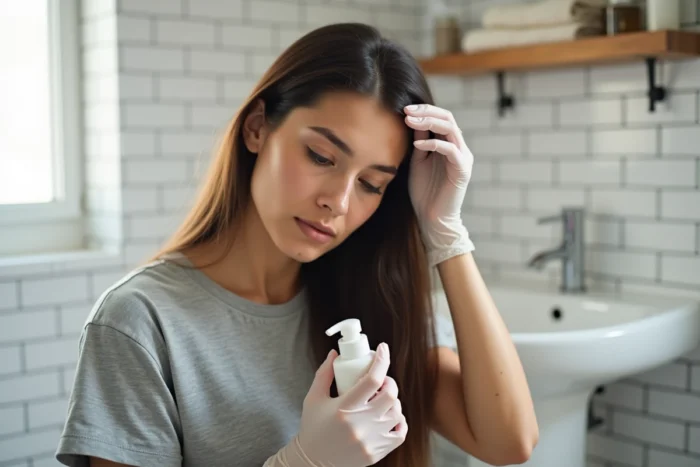
Vermogal is an anti-parasitic gel containing bioallethrin, an active ingredient from the synthetic pyrethroid family. Its initial indication targets the elimination of lice and nits on the scalp. Before any application, correctly identifying the nature of the hair problem remains a prerequisite often overlooked: hair loss or scalp itching does not automatically mean lice infestation.
Composition of Vermogal and distinction from validated treatments against lice
Bioallethrin acts by contact on the nervous system of parasites. It causes rapid paralysis of the adult louse. This mechanism is chemical, which places Vermogal in the category of classic insecticides.
Recent medical recommendations favor a different approach. According to VIDAL, physical action treatments (dimethicone, oxyphthirine, isopropyl myristate, coconut or paraffin oil) are now preferred over chemical insecticides. The main reason: the emergence of resistance in lice against pyrethroids.
A detailed article on the use of Vermogal for hair and lice helps better understand the application protocol suitable for this specific product. The French High Council of Public Hygiene also recommends examining all individuals living under the same roof and treating only those who are actually infested, simultaneously, to avoid recontamination.
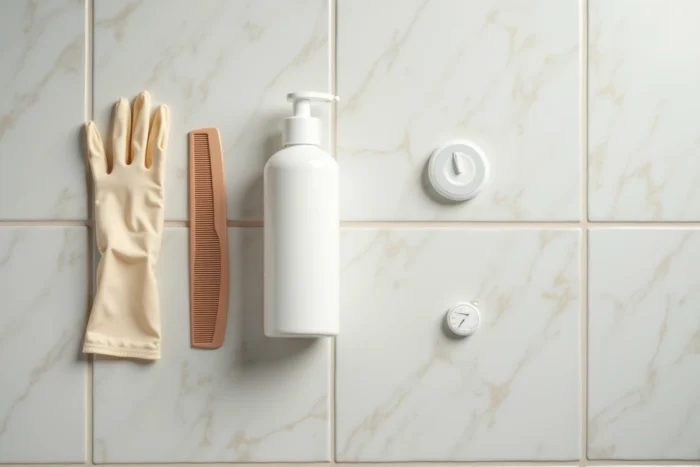
Application protocol for Vermogal on the scalp
The gel comes in a tube. The application should not be done pure on the scalp. Here are the steps reported by experienced users:
- Place a small amount of gel in a bowl, then dilute with a bit of water to achieve a fluid consistency applicable to the roots
- Apply evenly to the roots of the scalp (not on the lengths), possibly using a henna syringe for more precision
- Leave on for at least two hours; some users keep it on overnight under a cap
- Rinse thoroughly and follow up with a mild shampoo
The frequency recommended by regular users is one application per week. Applying the product daily without rinsing, as some do, raises questions about potential long-term irritation of the scalp.
Precautions during application
Contact with the eyes must be strictly avoided. Bioallethrin is an eye irritant. In case of accidental splashes, rinse immediately and thoroughly with clear water.
For young children, extra caution is required. Clinical recommendations emphasize that any anti-lice treatment in children warrants prior medical advice, particularly for products containing chemical insecticides.
Lice, ringworm, or alopecia: making the right diagnosis before treatment
Vermogal treats lice. It does not treat ringworm or hormone- or nutrition-related alopecia. This confusion frequently arises in forums where users apply the product to combat persistent hair loss.
Scalp ringworm, for example, is a fungal infection that requires an oral antifungal prescribed by a doctor. A shampoo or local gel alone is insufficient for this type of pathology. Hairless patches, scales, intense itching without visible nits point towards a diagnosis different from lice infestation.
Before purchasing an anti-parasitic treatment, verifying the actual presence of lice or nits on the scalp is the first step. A very fine-toothed comb passed through damp hair, strand by strand, can confirm or refute an infestation.

Actual effectiveness of Vermogal against lice resistance
Synthetic pyrethroids, including bioallethrin, face a documented problem: lice develop resistance. VIDAL explicitly mentions that this resistance has led to the development of physical action products, now favored in French recommendations.
In practical terms, this means that a treatment with Vermogal may fail not due to improper application, but because the lice present on the scalp are resistant to the molecule. In case of failure after two applications spaced a week apart, changing therapeutic strategy becomes relevant.
The combination of comb and treatment
No anti-lice product, whether chemical or physical, works optimally without the complementary use of a lice comb. Nits, firmly attached to the base of the hair, often resist rinsing. Methodically using the comb after each treatment remains the most reliable method to dislodge them.
- Run the comb through wet hair, strand by strand, from root to tip
- Clean the comb after each pass on a paper towel to check for the presence of nits or lice
- Repeat the operation every two to three days for at least two weeks, even after the apparent disappearance of the parasites
The French High Council of Public Hygiene reminds us that recontamination is the primary cause of treatment failure. Treating all infested individuals in the household on the same day remains the basic condition to avoid an endless cycle of reinfestations.
Vermogal retains a place in the hair anti-parasitic arsenal, but its effectiveness depends as much on the diagnosis made beforehand as on the applied protocol. In the face of a persistent infestation despite two well-conducted treatments, consulting a pharmacist or doctor to consider a physical action product (dimethicone, silicone oil) is the most reasonable alternative.