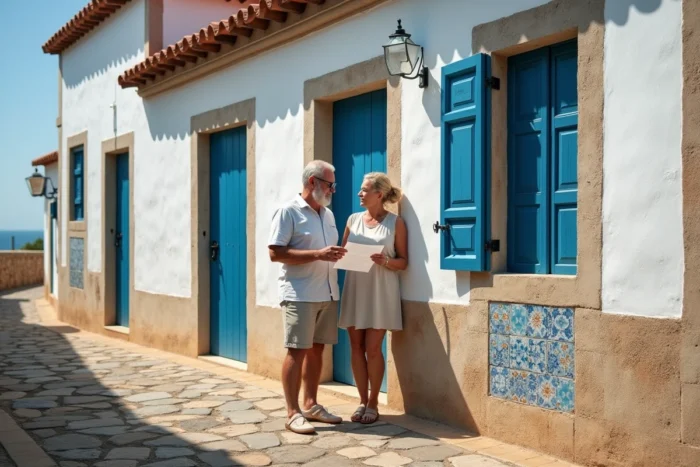
A fisherman’s house in Portugal is first identified by its structure: load-bearing walls made of limestone or schist, a surface area rarely exceeding 80 m², a low roof, and sometimes a back patio leading to a narrow street. This type of property attracts buyers due to its entry price, but there are many technical points of caution that are specific to this segment of the Portuguese market.
Structural Diagnosis of a Portuguese Fisherman’s House: What the Notary Does Not Check
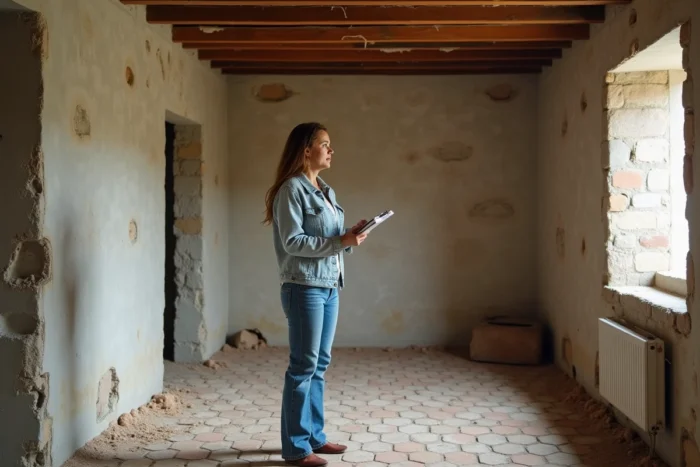
In Portugal, the notary does not verify the physical compliance of the property. We recommend hiring a lawyer specialized in real estate, as well as a local civil engineer to inspect the structure before any purchase promise.
Old fisherman’s houses present recurring pathologies: rising damp due to proximity to the ocean or a lagoon, undersized frameworks modified without permits, unregistered extensions in the land registry. An unregistered extension blocks resale and exposes you to fines.
The Portuguese land registry (Caderneta Predial) and the property register (Certidão do Registo Predial) must exactly match the physical reality of the property. Any discrepancy, even a simple masonry pergola, constitutes a legal irregularity. Regularizations are possible, but they take several months and involve architect and surveyor fees.
Before committing to buy a small fisherman’s house in Portugal, ensure that the registered land, the declared built area, and the actual state of the property are consistent. This step alone can save you months of administrative blockage.
Alentejo Coast and Ria Formosa: Two Markets with Distinct Price Logics
Most guides direct buyers towards the Algarve or Lisbon. We observe a different dynamic in two micro-markets that deserve detailed analysis.
Fuseta vs. Olhão: The Ria Formosa Differential
Olhão and Fuseta are two active fishing villages on the Ria Formosa, separated by a few kilometers. Prices in Fuseta remain 15 to 25% lower than in Olhão for comparable old houses. Properties to renovate are negotiated between 250,000 and 500,000 euros in Fuseta, compared to 350,000 to 750,000 euros in Olhão before renovations.
This difference is explained by Olhão’s tourist notoriety and the density of services (covered fish market, ferry connections to barrier islands). Fuseta maintains an active fishing fabric and a lower seasonal rental pressure, making it a relevant choice for a secondary residence used off-season.
Vicentine Coast and Alentejo Coastline
The Alentejo coast, between Porto Covo and Zambujeira do Mar, is still a relatively preserved alternative. The speculative pressure remains significantly lower than in the Algarve. Fisherman’s houses are rarer on the market here, as the old building stock is small and often family-owned. When a property becomes available, it sells quickly.
The Southwest Alentejo Natural Park and the Vicentine coast impose strict urban planning constraints: prohibition of elevation, regulated materials, limits on densification. These restrictions protect the heritage value of the property but increase the cost and duration of renovations.
Acquisition Taxation in Portugal: Items to Budget
The displayed price of a fisherman’s house does not reflect the actual cost of the operation. Several taxes are added to the transaction amount.
- IMT (Imposto Municipal sobre Transmissões): transfer tax calculated on the value of the property, with a progressive scale that can reach 8% depending on the amount and use (primary or secondary residence)
- Imposto de Selo (stamp duty): 0.8% of the purchase price, mandatory
- Notary and registration fees: generally between 1,000 and 2,000 euros
- Lawyer’s fees: to be anticipated from the start, as the legal verification of the property is their responsibility, not the notary’s
We recommend setting aside an additional budget representing a significant portion of the purchase price to cover all these fees, even before estimating any potential renovation costs.
Coastal Villages of the North: Porto, Vila do Conde, Póvoa de Varzim
Porto and the villages of Costa Verde are gaining ground in searches by foreign buyers. This shift has been observed for several years, with growing interest in old houses located between Vila do Conde and Póvoa de Varzim.
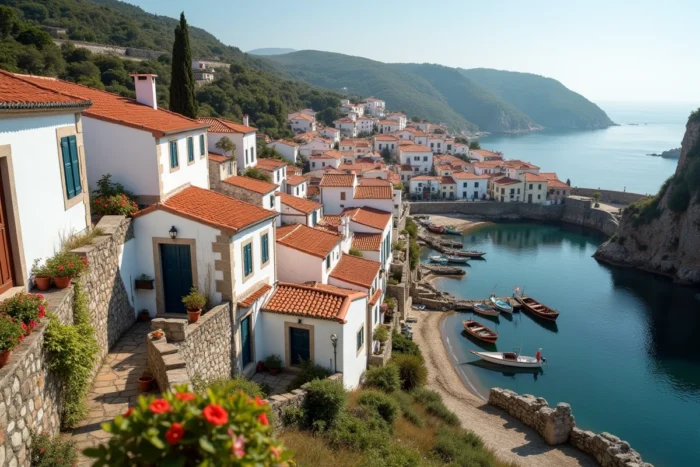
Fisherman’s houses in this area are often built of granite, with thick walls and modest surfaces. Granite offers superior thermal inertia compared to the limestone of the Algarve, an advantage for winter comfort in a wetter and cooler region.
The market here is less structured than in the Algarve: no agencies specialized in this segment, more direct sales or local word-of-mouth. Going through a French-speaking Portuguese lawyer who knows the area remains the most reliable method to identify properties before they are listed online.
Points of Caution Before Signing the Contrato-Promessa
The purchase promise contract (contrato-promessa de compra e venda) binds both parties. The payment of a deposit, usually substantial, accompanies the signature. In case of buyer withdrawal, this deposit is forfeited.
- Check that the NIF (Portuguese tax identification number) is obtained and active before any signature
- Confirm the absence of tax debts or unpaid condominium charges on the property
- Demand the habitation license (licença de utilização): without this document, the property is not legally habitable, even if it has been occupied for decades
For very old fisherman’s houses, the habitation license may never have been issued. Regularization involves a file with the câmara municipal (town hall), with the intervention of an architect to certify compliance. This issue blocks many transactions when discovered too late.
The market for fisherman’s houses in Portugal rewards methodical buyers. Each coastal village has its own urban planning rules, its own market rhythm, and its own built pathologies. Skipping the cadastral verification or the habitation license turns an apparent good deal into a lengthy administrative file.