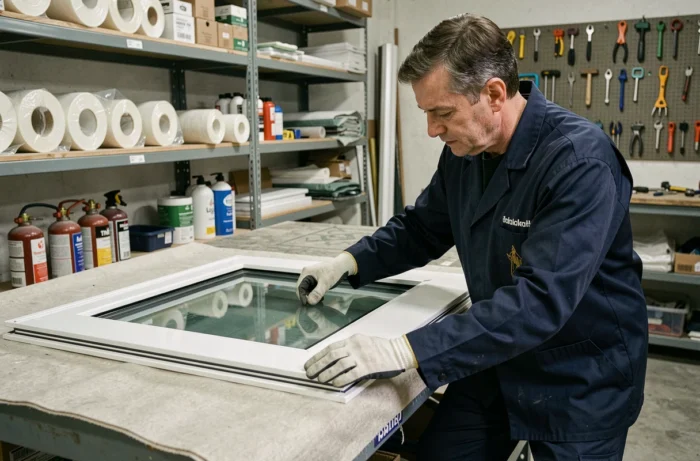
Reintroducing gas into already installed double glazing is a common concern among homeowners who notice a decrease in their windows’ insulation. The technical answer to this question is often disappointing: argon gas is injected at the factory into a sealed unit, and its loss indicates a structural sealing problem. Understanding what is actually happening between the two panes allows for the right decision to be made, whether it be a targeted intervention or the replacement of the glazing.
Ug Coefficient of Glazing: What the Gas Really Changes in Insulation
The Ug coefficient measures the thermal transmission through the glazing alone. The lower it is, the better the insulation. Argon gas reduces this coefficient compared to a simple air gap, but it does not work alone.
The overall performance depends on three combined parameters: the type of gas between the panes, the thickness of the gap, and the presence of a low-emissivity coating on the glass. Removing any one of these elements degrades the final result.
| Parameter | Role in Insulation | Impact on Ug |
|---|---|---|
| Argon Gas | Reduces convection between the panes | Moderate improvement in Ug compared to air |
| Low Emissivity Coating | Reflects infrared radiation inward | Significant improvement in Ug |
| Gap Thickness | Limits thermal exchanges by conduction | Optimal around 16 mm |
| Sealing of Joints | Holds the gas and prevents moisture | Conditions the durability of all other parameters |
This table highlights a often underestimated point: the low-emissivity coating contributes more to insulation than the gas alone. A glazing unit that loses its argon but retains its low-emissivity coating does not experience catastrophic insulation loss. In contrast, a glazing unit with failing seals also allows moisture in, which degrades overall performance.
For those looking to reintroduce gas into a high-performance double glazing, this hierarchy of factors guides the thought process towards the correct diagnosis before any intervention.
Loss of Argon Gas in Double Glazing: Causes and Diagnosis
Argon gas is sealed within the glazing unit during factory manufacturing. There is no refill valve on installed glazing. This design explains why the notion of “recharging” is misleading: you do not refill gas like you inflate a tire.
The loss of gas always results from a breach of sealing. Several documented causes include:
- Natural aging of the sealing joints (butyl and polysulfide or structural silicone), which lose their elasticity after several years of exposure to temperature variations
- Manufacturing or installation defects that compromised the hermeticity from the outset
- Thermal or mechanical shock that cracked the peripheral seal without breaking the glass
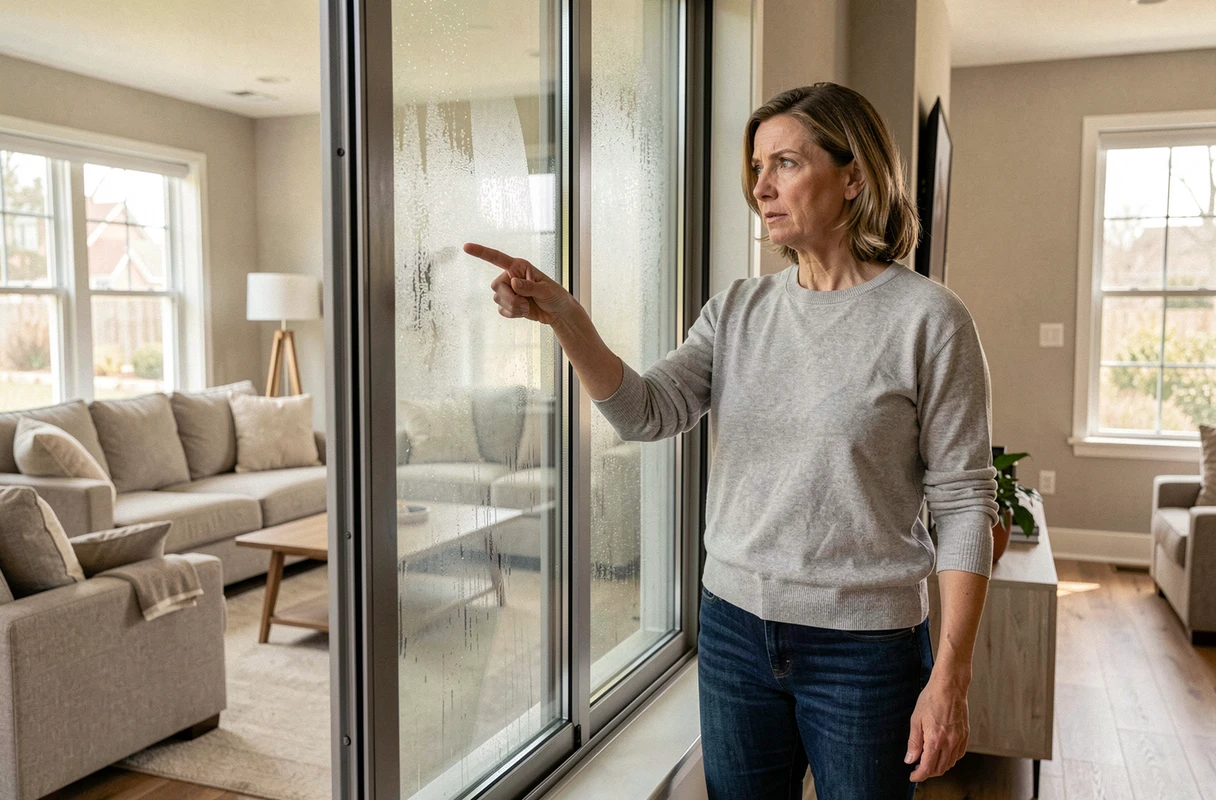
The most visible symptom is the fogging between the two panes, which is impossible to clean since it forms in the inter-pane space. This internal condensation confirms that the unit is no longer airtight. At this stage, the gas has already largely escaped.
A Quick Test to Assess the Situation
Running your hand along the inner pane in winter can help detect localized cold spots. A uniformly cold pane suggests generalized thermal loss. Visible condensation between the panes remains the most reliable sign of a compromised unit.
Reinjection of Argon Gas: Technical Feasibility and Limits
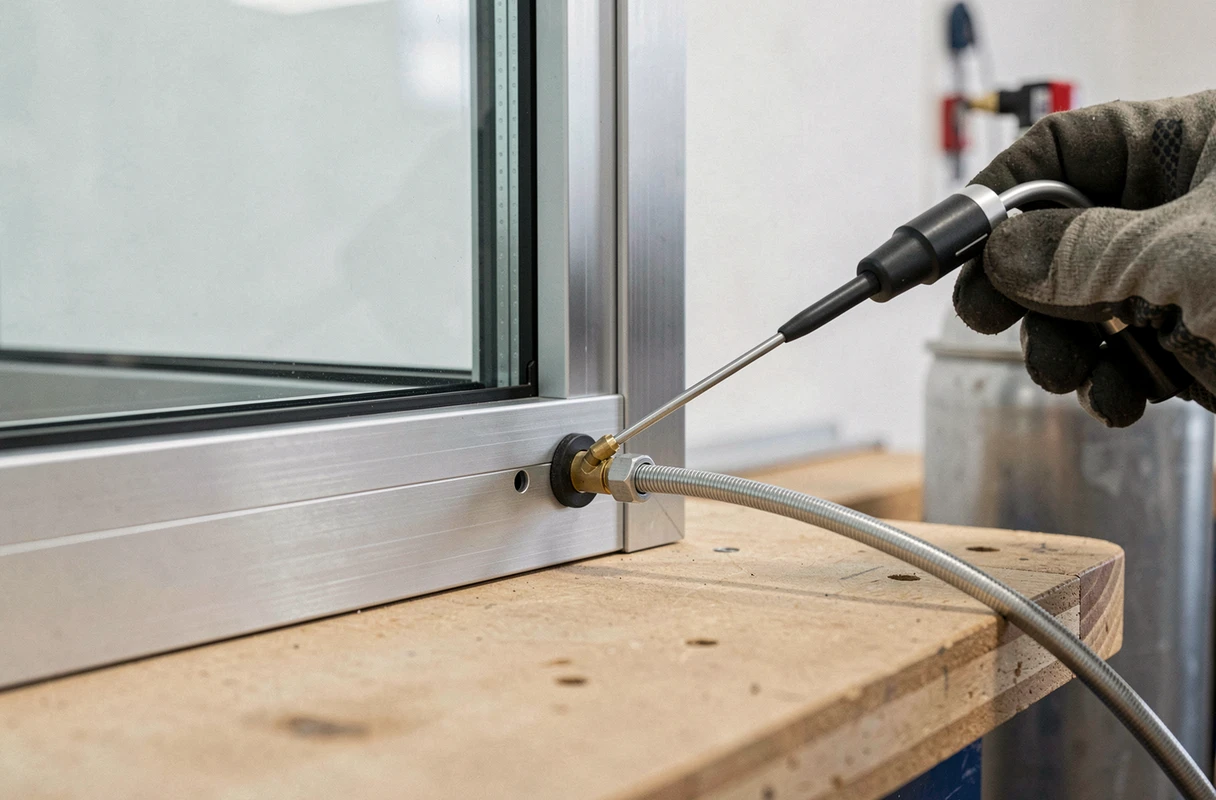
Technically, some professionals offer to drill the glazing, inject argon, and then seal it. This operation exists, but it does not restore the original airtightness of the glazing unit.
The problem is circular: if the gas has leaked, it is because the seal is failing. Reinserting gas without replacing the seal is akin to filling a leaky container. The gas will escape again, sometimes in just a few months.
Even in cases where drilling and sealing are done neatly, the intervention creates an additional weak point in the glazing. No manufacturer of insulating glazing guarantees a unit after reinjection, which poses a problem in case of disputes or claims.
Cost Comparison: Reinjection or Glazing Replacement
Reinjection, when available, is cheaper in the short term than replacement. However, its limited duration often necessitates rescheduling an intervention a few years later. Replacing the glazing alone (without changing the frame) offers a more favorable cost-durability ratio, as it starts from a new unit with intact seals, gas, and low-emissivity coating.
Replacement of Insulating Glazing: Criteria to Check Before Intervention
When the diagnosis confirms a loss of airtightness, replacing the glazing unit without touching the frame is often the best option. However, a few points must be checked before validating the intervention.
- The condition of the frame (wood, PVC, aluminum): a warped or rotten frame will not properly hold a new glazing
- The exact dimensions of the rebate, to order glazing to precise measurements
- The type of glazing suitable for the context: double glazing with enhanced insulation using argon and low-emissivity coating for most situations, triple glazing in areas with harsh climates or highly exposed facades
- The certification of the glazing (CE marking, announced Ug coefficient) to ensure actual performance
A qualified glazier performs these checks on-site. Replacing the glazing alone generally takes less than an hour per window and does not require masonry work.
The lifespan of well-installed double glazing with quality seals far exceeds a decade. Investing in a new unit rather than uncertain reinjection ensures stable thermal insulation in the long term, without the need for intermediate maintenance interventions.