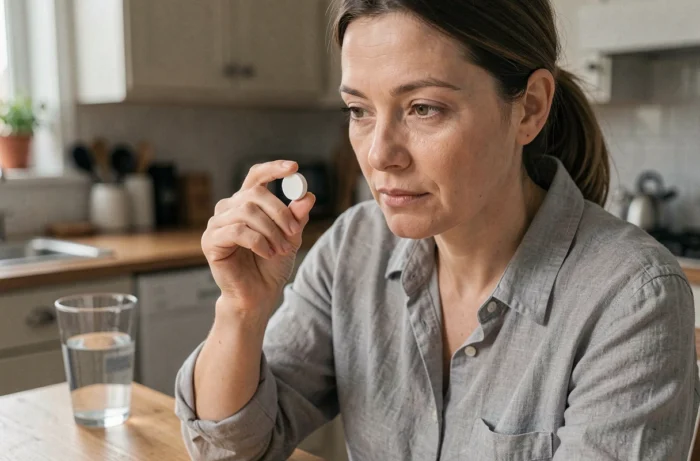
We pop a Vichy pastille after a heavy meal, almost reflexively, without reading the ingredients. The action is mundane, nearly automatic. However, depending on the chosen version (with or without sugar) and the amount consumed, the effects on the digestive system are not the same at all.
Sorbitol and sugar-free Vichy pastilles: the trap of the laxative effect
Competitors readily talk about “digestive pastilles” or the “benefits of mineral salts.” The downside of sugar-free versions, which today represent a significant share of the products available in pharmacies and supermarkets, is rarely discussed.
The main sweetener used in the sugar-free Vichy pastilles is sorbitol, a polyol with real laxative potential. It is found in many “sugar-free” candies and chewing gums, and its mechanism is well documented: poorly absorbed by the small intestine, it draws water into the colon and speeds up transit.
In practical terms, sucking on several pastilles throughout the day (which happens quickly when you keep them in your pocket or on your desk) can trigger gas, bloating, cramps, or even loose stools. The instructions for sorbitol-based throat pastilles, like some Vicks products, explicitly mention that excessive consumption can produce laxative effects. Sugar-free Vichy pastilles are no exception.
People suffering from irritable bowel syndrome are particularly at risk. For them, even a moderate dose of polyols can be enough to trigger a crisis. To delve deeper into the Vichy pastilles to know regarding adverse effects, the sorbitol content of each product should be checked on the packaging before purchase.

Sodium bicarbonate and salt intake: an underestimated risk for blood pressure
Sodium bicarbonate is the key ingredient in Vichy pastilles, the one that gives them their reputation as a “digestive candy.” It effectively neutralizes gastric acidity and can temporarily relieve heartburn or bloating.
The problem is that sodium bicarbonate is sodium. And each pastille contains a fraction that adds up throughout the day. For someone monitoring their blood pressure, following a low-sodium diet, or taking antihypertensive medications, regular consumption of Vichy pastilles can undermine dietary efforts.
The naturally carbonated mineral waters from the Vichy basin are also known for their high sodium content. This is what gives the pastilles their characteristic taste, but also what makes them inadvisable in quantity for the following profiles:
- People with hypertension or those undergoing treatment for blood pressure, where additional sodium intake can worsen water retention
- Patients suffering from kidney failure, whose ability to eliminate sodium is reduced
- Individuals following a low-sodium diet prescribed by a doctor, for whom every hidden source of salt counts
We are not talking about having a pastille occasionally. The risk arises with daily and repeated consumption, when the pastille becomes a reflex rather than an occasional gesture.
Vichy pastilles and dental health: sugar or sugar-free, two different problems
The classic versions contain sugar, and sucking on a candy for several minutes exposes the enamel to prolonged acid exposure. This is the basic mechanism of cavities: oral bacteria metabolize sugar and produce acids that attack the tooth.
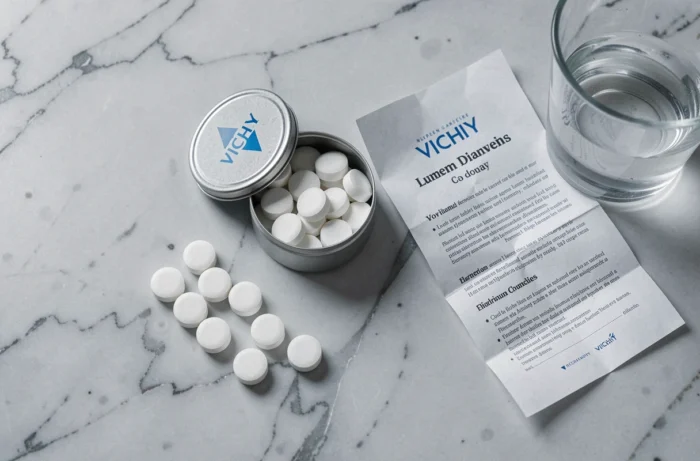
Switching to sugar-free versions does not solve everything. Sorbitol is certainly not cariogenic like sucrose, but the inherent acidity of certain flavors (mint, lemon) can erode enamel if consumption is frequent. On this point, feedback varies among dentists and individual habits.
The simplest precaution is not to suck on pastilles just before brushing (the enamel weakened by acidity would be further damaged by the brush) and to rinse the mouth with water afterward.
Concrete usage precautions for Vichy pastilles
Rather than a list of generic recommendations, here are the situations where vigilance is truly necessary:
- Pregnancy and breastfeeding: high doses of sodium bicarbonate can alter the acid-base balance. In case of doubt, consult your doctor before making it a daily habit
- Medication intake: bicarbonate can interact with certain treatments (antibiotics, lithium, aspirin) by altering their absorption. A minimum two-hour gap between the pastille and the medication is a precaution
- Young children: the pastille is hard, octagonal, and small. There is a risk of choking, especially before the age of five or six
- Diabetes: versions with sugar increase blood sugar levels. Sugar-free versions contain polyols which, while less hyperglycemic, are not completely neutral metabolically
The useful reflex is to read the ingredient list on the back of the box. Between two references of Vichy pastilles, the composition can vary significantly: proportion of mineral salts, type of sweetener, presence or absence of acidifying flavors.
What quantity of Vichy pastilles per day is safe
There is no official threshold published by a health authority for Vichy pastilles as a confectionery. A few pastilles per day do not pose a problem for a healthy person, without specific kidney, cardiac, or digestive conditions.
Beyond that, the accumulation of sodium and sorbitol (for the sugar-free ones) starts to weigh on the body. The best indicator is the body itself: recurring bloating, disrupted transit, or unusual thirst after a series of pastilles are signals not to be ignored.
Vichy pastilles remain a candy, not a dietary supplement or a medication. Consuming them as an occasional treat is not risky. Turning them into a mechanical habit of several dozens a day is where adverse effects can set in.