
Online luxury refers to the sale of high-end products through digital channels, from proprietary platforms of brands to specialized marketplaces. This segment is undergoing rapid changes, driven by new European regulatory requirements and the geographical shift of demand towards Asia. Understanding these developments requires going beyond the simple catalog of collections to examine the mechanisms that are reshaping distribution and brand compliance.
Digital Product Passport: What the European DPP Changes
The Digital Product Passport (DPP) represents the most significant structural change for brands selling online. The European Union launched the central DPP registry in 2026, with a testing environment for businesses. The traceability of a product, from its raw material to its sale, becomes a compliance obligation rather than just a commercial argument.
Specifically, each item sold online will need to be associated with a digital identifier that provides access to its manufacturing, composition, and sustainability data. For jewelry or leather goods brands, this means documenting the origin of leathers, precious metals, and stones with a level of detail that most current information systems do not manage.
Brands present on luxe-on-line.eu as well as on their own digital stores must anticipate this shift. The DPP is not only relevant for large groups: any player offering fashion or jewelry pieces in the European market will be required to comply with the registry, regardless of its size.
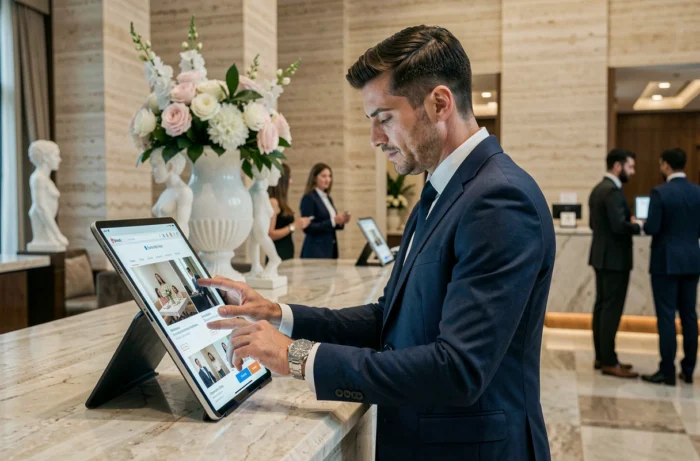
ESPR Regulation and Priority Categories for the Luxury Sector
The regulatory framework does not stop at the DPP. The ESPR (Ecodesign for Sustainable Products Regulation) expands the pressure on products sold online by defining priority categories. Textiles are among the first product families affected, alongside furniture, aluminum, and steel.
For a fashion house marketing its collections online, the ESPR imposes a gradual increase in obligations related to the product passport. Deadlines vary by product family, but the trajectory is clear: within a few seasons, no online sale of high-end textiles will be possible without accessible eco-design data for consumers.
What This Means for Online Stores
Sales platforms will need to adapt their product listings. A buyer consulting a ready-to-wear piece or a leather accessory will access standardized information on composition, repairability, and environmental footprint. This level of transparency changes how brands present their collections and can become a differentiation criterion.
- Product listings will include a link to the digital passport, with complete traceability data for each item.
- Brands will need to document the repairability of their products, a criterion still marginal in the online luxury universe.
- Multi-brand marketplaces will be responsible for verifying the compliance of data provided by partner brands.
Online Luxury Market in Asia: The Indian Acceleration
The geographical shift of demand is another structuring trend. While China remains a benchmark market, India is emerging as a fast-growing growth driver for online luxury. A report by Ken Research published in August 2026 documents this acceleration and highlights specific constraints: product authentication, local compliance, and tailored omnichannel strategy.
Selling luxury online in India is not just about opening a digital store. Consumer expectations differ: demand focuses as much on the shopping experience (packaging, after-sales service, personalization) as on the product itself. Brands that succeed in this market invest in hybrid customer journeys, blending physical stores and digital channels.
Authentication and Trust in Online Sales
Counterfeiting remains the main barrier to purchasing luxury online in emerging markets. Digital certification technologies, combined with the European DPP, offer a partial response. Some brands integrate NFC chips or QR codes linked to a blockchain to guarantee the authenticity of each item sold, including in the second-hand market.
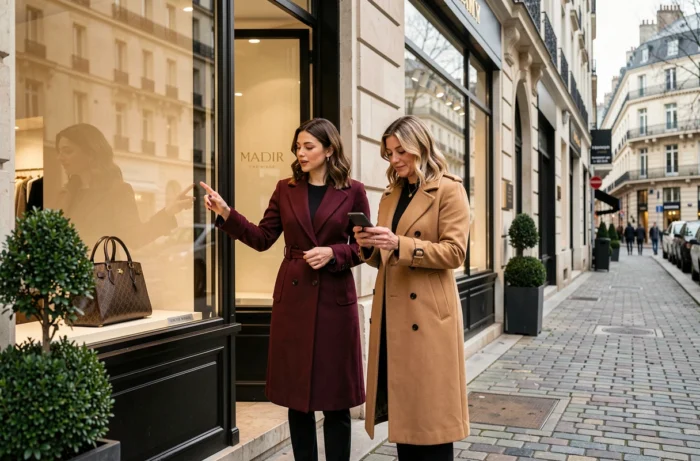
New Collections and Collaborations: What Redefines the Online Offer
Beyond regulatory and geographical issues, the offer itself is evolving. Brands are multiplying cross-universe collaborations, from automotive luxury to gastronomy, to create exclusive pieces distributed only online. These limited editions generate qualified traffic to digital stores and strengthen the link between fashion, jewelry, and lifestyle.
The jewelry sector illustrates this trend well. Historic houses, located between Faubourg Saint-Honoré and Place Vendôme in Paris, now offer capsule collections available exclusively on their websites. The online channel is no longer a supplement: it becomes the preferred launch venue for certain pieces.
- Online capsule collections create controlled rarity, with sales windows lasting only a few hours.
- Collaborations between fashion brands and players outside the sector (automotive, design, art) are multiplying each season.
- The online second-hand luxury market is gaining legitimacy thanks to digital certificates of authenticity.
The convergence of European regulation, geographical expansion, and renewal of the offer is reshaping online luxury at a pace that industry players have not experienced since the advent of the first digital stores. Brands that master the traceability of their pieces have a concrete advantage over those that still treat compliance as an administrative constraint.