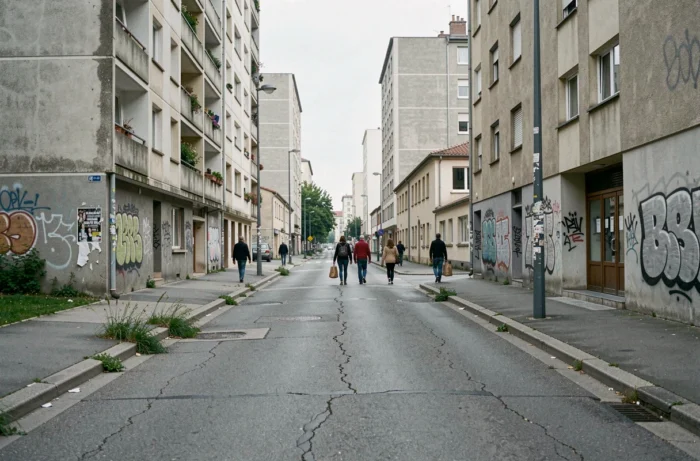
Blois officially has two priority neighborhoods for urban policy (QPV) for the period 2024-2030: Blois Nord and Quinière Nord-Ouest. This classification is based on a criterion of median income of residents compared to a threshold set by decree, not on a raw count of delinquency incidents. Understanding this distinction helps avoid shortcuts between “classified neighborhood” and “dangerous neighborhood.”
QPV in Blois: what the median income classification really means
The QPV system divides the national territory into areas where the median income falls below a regulatory threshold. In Blois, two areas meet this criterion since the revision that came into effect on January 1, 2024: Blois Nord (which includes Kennedy, Coty, Croix-Chevalier, and Sarrazines) and Quinière Nord-Ouest, which was included in the system during this same revision.
A QPV classification primarily indicates economic fragility. It triggers public funding through the “Quartiers 2030” city contracts, which cover education, employment, health, security, and ecological transition until 2030. A classified neighborhood is therefore not just an area to monitor: it is also a territory where public investment will concentrate in the coming years.
No other sector of Blois is classified as QPV. Neither the city center, nor the Grouëts, nor the left bank are included in the official perimeter. When looking to identify the neighborhoods to avoid in Blois, the official map remains the most reliable starting point to separate facts from reputations.
Blois Nord and Quinière: very localized realities
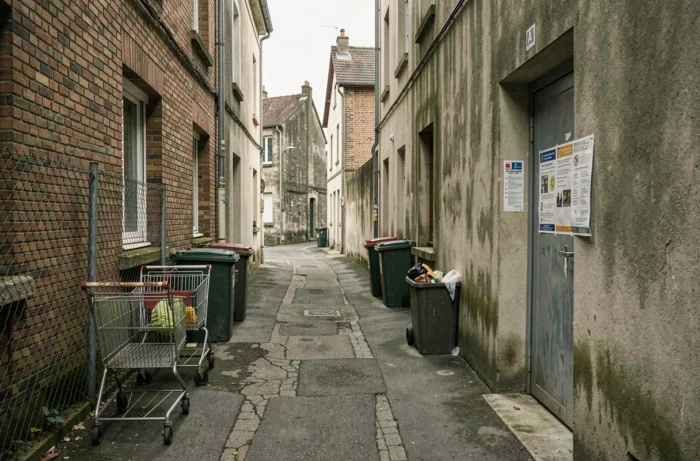
Grouping four sectors under the label “Blois Nord” creates frequent confusion. Kennedy, Coty, Croix-Chevalier, and Sarrazines present different atmospheres from one street to another. Field reports describe Kennedy as composed of micro-sectors, with tensions concentrated around specific buildings rather than spread throughout the entire neighborhood.
Quinière Nord-Ouest follows a similar pattern. Its inclusion in the QPV system in 2024 signals a deterioration of socio-economic indicators, but nuisances remain localized to points identified by residents.
Daily nuisances
Delinquency is not the only criterion to consider. Feedback from residents and real estate agents highlights factors that are sometimes more decisive for quality of life:
- Nocturnal noise around certain building entrances, linked to recurring gatherings in the evening
- The condition of common areas in residences with high tenant turnover, indicating a lack of collective maintenance
- Public transport availability, which is uneven depending on the streets, isolating certain blocks from the rest of the city
- The presence (or absence) of local shops, which directly affects the residential attractiveness of a micro-sector
These criteria vary from one building to another within the same neighborhood. Analyzing at the scale of the street or building provides a much more accurate picture than labels for entire neighborhoods.
Vienne neighborhood and left bank of Blois: confronting preconceived ideas with reality
The Vienne neighborhood, located on the left bank, regularly comes up in online discussions as a sensitive area. It is not classified as QPV. Its profile is that of a popular sector with old buildings, prices per square meter below the municipal average, and marked social diversity.
The nuisances reported in certain streets of Vienne are more related to nighttime activity and the condition of some old housing than to structural insecurity. The left bank as a whole does not have an official classification as a sensitive area.
The city center of Blois also does not appear in any priority perimeter. It faces the common problems of medium-sized city centers: occasional commercial vacancies, nuisances related to nightlife, and minor proximity delinquency. Nothing that distinguishes it from comparable municipalities in the Loire Valley.
Concrete checks before buying or renting in Blois
Rather than relying on reputations, three steps allow for evaluating a sector before committing.
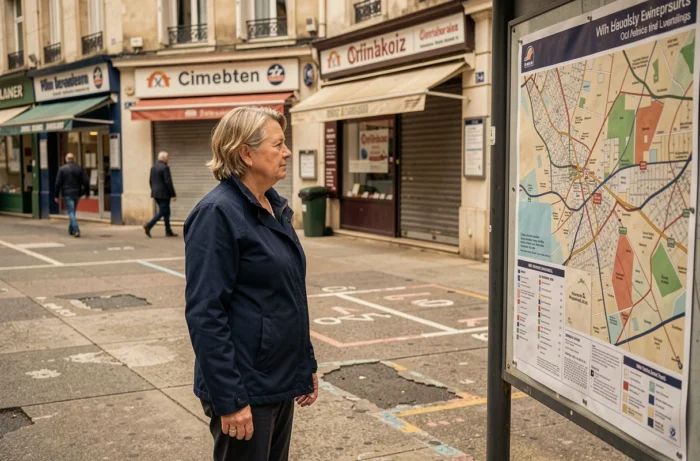
- Consult the official QPV map on the SIG Politique de la Ville website to check if the specific address falls within a classified perimeter
- Visit the area at different times (morning, late afternoon, evening) to observe the actual atmosphere of the micro-sector, the condition of common spaces, and the foot traffic
- Check public transport availability and proximity to services (shops, schools, health access), which determine both quality of life and resale potential
For a rental investment, the QPV classification can paradoxically work in favor of yield. Acquisition prices remain low while rehabilitation programs funded by the “Quartiers 2030” contracts can improve the living environment in the medium term. The calculation depends on the timeline of projects and the exact location of the property within the perimeter.
In Blois, the difference between a good and a bad location often comes down to just a few streets. The only two officially classified neighborhoods concentrate real economic fragilities, but neighborhood tensions or daily nuisances do not respect administrative boundaries. Visiting, observing, and cross-referencing sources remains the most reliable method to form an opinion that goes beyond labels.